
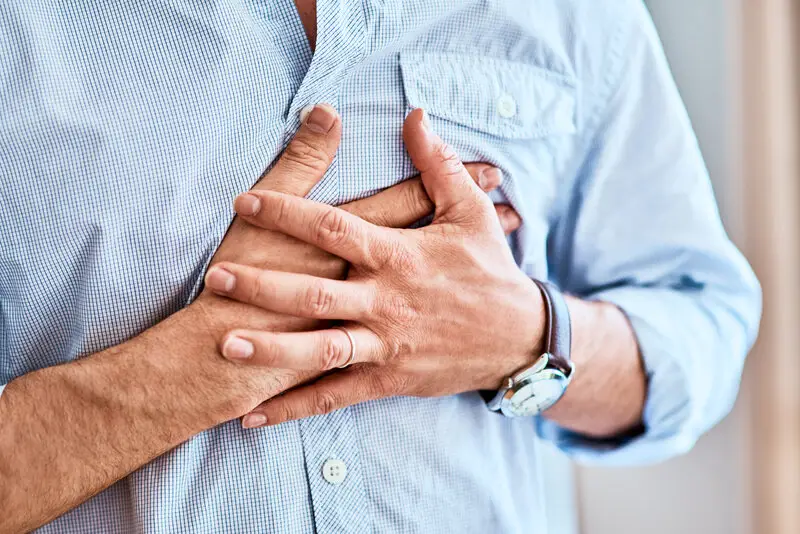
It can stop you in your tracks. You feel something in your chest, a lingering ache or sharp pinch, and your mind immediately jumps to the worst-case scenario. If you have ever found yourself wondering, “Why does my chest hurt?”, you are one of many.
The truth is, not all chest pain means something is wrong with your heart. In fact, most cases fall into the category of chest pain, not a heart attack. Research from the American Heart Association demonstrates that many cases of chest discomfort are not heart-related, even though they can feel just as intense and alarming.
That said, not all chest pain is caused by a heart attack, but it should be taken seriously, especially if it is new, severe, comes with shortness of breath, nausea, dizziness, or spreads to the arm, back, neck, or jaw.
At HealthyU Clinics, we help patients navigate chest discomfort every day. Because it can come from your digestive system, muscles, lungs, or even stress, the challenge is not just identifying the source but knowing when it requires immediate attention.
In this guide, we explore the different types of chest pain that’s not a heart attack, what each means, and when it’s time to seek help.
Table of Contents
GERD and Acid Reflux: A Common Culprit
One common cause of non-cardiac chest pain starts in your digestive system.
Gastroesophageal reflux disease, or GERD, occurs when stomach acid flows back up into the esophagus, irritating the lining and causing a burning sensation that can feel similar to heart-related pain. Many people describe it as a tightness in the chest or pressure that shows up after eating.
GERD discomfort often sits behind the breastbone and may move upward toward the throat. It often shows up after certain meals or when your position changes, especially if you lie down too soon after eating.
A few patterns can help you recognize it:
- Burning Sensation After Eating:
Symptoms often follow meals, especially ones that are spicy, acidic, or high in fat. - Symptoms That Shift With Position:
Lying flat or bending forward can make the discomfort more noticeable. - Relief With Antacids:
Over-the-counter options may ease symptoms, which is less typical with heart-related pain.
GERD is extremely common, and many people experience it without realizing it is behind their symptoms. The American Gastroenterological Association notes that acid reflux is one of the most common non-cardiac causes of chest discomfort.
Even so, recurring reflux should not be brushed off. If it keeps coming back or starts affecting your routine, it is worth getting a clearer understanding of what is causing it.
Musculoskeletal Causes: When Your Muscles and Ribs Are the Problem
In many cases, chest pain is tied to your muscles, joints, and body movement. This type of pain often feels sharp and localized, and is easily triggered by movement, showing up after a workout or simply from sleeping in an awkward position. Many people notice a sharp pain in the chest or right side chest pain that shifts depending on how they twist, stretch, or breathe.
One of the more common causes is costochondritis, which is inflammation in the cartilage connecting your ribs to your breastbone. It can feel intense, but it is not heart-related.
This type of pain usually stands out because:
- Pain Changes With Movement:
Actions like twisting your body or taking deep breaths can make it more noticeable. - Tenderness to the Touch:
Applying pressure on the area may recreate or worsen the discomfort. - Localized Pain:
The discomfort stays in one area rather than spreading outward.
In most cases, this kind of chest pain improves with time, but it can last for several weeks or longer, depending on the cause. While it is not typically dangerous, it can still be very disruptive in your day-to-day.
Pay attention to posture and avoid repeated strain, and give your body time to recover. If it lingers or starts to feel different, it is worth having it checked to rule out anything more serious.
Anxiety and Panic Attacks: The Mind-Body Connection
Anxiety and panic attacks can create very real physical symptoms, including chest tightness, a racing heartbeat, and the feeling that you cannot take a full breath. In these moments, when tensions are high, people can jump to conclusions.
In reality, your body is shifting into a stress response, creating tension and changes in breathing that lead to chest discomfort. The Anxiety and Depression Association of America explains how this response can trigger symptoms like chest tightness, even when there is no underlying heart issue.
There are a few ways anxiety-related chest pain tends to manifest itself:
- Sudden Onset During Stress:
Symptoms often show up when you are feeling overwhelmed or under pressure. - Racing Or Irregular Heartbeat:
You might notice your heart pounding or fluttering, similar to what people experience with heart palpitations. - Difficulty Taking A Full Breath:
It may feel like you cannot get a full, satisfying breath, even though your oxygen levels are normal. - Symptoms Ease As You Settle:
When your breathing settles and your body relaxes, the discomfort usually fades.
Because anxiety symptoms can overlap with heart and lung conditions, new or concerning chest pain should still be evaluated. If you repeatedly experience anxiety-related chest discomfort, get ahead of it by recognizing patterns, understanding your triggers, and having conversations about mental health awareness.
Lung-Related Issues: Respiratory Causes of Chest Discomfort
When chest pain shifts with your breathing, it often points to your lungs rather than your heart. This type of discomfort tends to feel sharper when you inhale, cough, or move your upper body. Infections like bronchitis or pneumonia can cause inflammation that leads to chest pain, while pleurisy affects the lining around the lungs, making each breath feel more uncomfortable than the last.
The American Lung Association notes that respiratory conditions often cause chest discomfort that worsens with breathing. In more serious cases, a pulmonary embolism can cause sudden chest pain and requires immediate emergency care.
You will usually notice a clear pattern. The pain may intensify with deep breaths, accompany a cough, or be accompanied by shortness of breath and fatigue. If an infection is involved, you may also feel run-down or develop a fever. When chest pain is linked to your breathing, it shouldn’t be ignored, even if the symptoms seem mild.
Gender-Specific Considerations in Non-Cardiac Chest Pain
Chest pain in women should be evaluated just as carefully as in men. Women can have classic chest pressure, but they may also have less typical symptoms such as shortness of breath, nausea, unusual fatigue, back pain, or jaw pain. Hormonal or breast-related discomfort can sometimes contribute to chest-area symptoms, but they should not be assumed to be the cause without appropriate evaluation.
If you start noticing a pattern or changes over time, it may be worth looking into whether hormonal imbalances could be causing chest discomfort.
When to Seek Medical Help: Red Flags vs. Safe-to-Wait Symptoms
Knowing when to act is just as important as understanding what might be causing your symptoms.
Chest pain that comes and goes can feel unpredictable. The key is recognizing when it needs immediate attention. Guidance from the American College of Cardiology emphasizes early chest pain evaluations, especially when symptoms are persistent or unclear.
- Call 911 Immediately:
Severe or crushing chest pain, pain that spreads to your arm, jaw, or back, shortness of breath, dizziness, or nausea. - Seek Urgent Same-Day Care:
Pain that persists, worsens, or keeps returning without a clear cause. - Do Not Self-Diagnose:
Even if symptoms seem related to reflux, stress, or muscle strain. - Monitor, But Do Not Ignore:
Mild discomfort that improves quickly and is clearly tied to movement, meals, or stress.
At HealthyU Clinics, we take the time to look at the full picture, not just the symptom itself. Our comprehensive physical exams will help you understand what is causing your symptoms, so you are not left guessing what to do next. If you or a loved one is experiencing symptoms of a heart attack, call 911 immediately. For those looking to stay ahead of their heart health, we also offer cardiology care in Arizona and Massachusetts.
Frequently Asked Questions About Chest Pain
How can I tell if my chest pain is serious or not?
If you notice shortness of breath, nausea, dizziness, or pain that spreads to your arm or jaw, it is a good idea to get checked.
Can stress really cause physical chest pain?
Yes, stress can cause chest pain that’s not a heart attack—and it happens more often than people expect. Stress and anxiety can trigger real physical responses in the body, including chest discomfort, changes in breathing, and a racing heartbeat.
Is chest pain in women different from men?
It can be. Women are more likely to experience subtle or less predictable symptoms, and factors like hormonal changes can also influence how chest pain shows up.
How long does non-cardiac chest pain typically last?
It depends on the cause. Acid reflux can last for hours, muscle-related pain may stick around for days, and anxiety-related symptoms often ease as your body settles. The pattern matters just as much as the duration.
Should I go to the ER for chest pain if I am young and healthy?
Age does not rule out serious conditions. If the pain is severe, persistent, or comes with other symptoms, it is always safer to get evaluated right away. If you or a loved one is experiencing a medical emergency, please dial 911 or head to the nearest emergency room.
DISCLAIMER: Any advice or information shared on our blog, website, or other online communication forum is intended for informational purposes only and is not to be considered a substitute for any professional medical advice or other advice. HealthyU Clinics does not make any representations or warranties and expressly disclaims all liability regarding any treatment, action, or effect on any person based on the general information provided through our blog, website, or other online communication forum. For specific concerns or if you need medical advice, please contact HealthyU Clinics to schedule an appointment with a qualified medical professional.